Home
/ Animal Cell Culture For Monoclonal Antibody : Animal Biotech | Cell Culture | Monoclonal Antibody / Animal cell culture technology has advanced significantly over the last few decades and is now generally considered a reliable, robust and relatively aect process development.
Animal Cell Culture For Monoclonal Antibody : Animal Biotech | Cell Culture | Monoclonal Antibody / Animal cell culture technology has advanced significantly over the last few decades and is now generally considered a reliable, robust and relatively aect process development.
Animal Cell Culture For Monoclonal Antibody : Animal Biotech | Cell Culture | Monoclonal Antibody / Animal cell culture technology has advanced significantly over the last few decades and is now generally considered a reliable, robust and relatively aect process development.. Animal cell culture technology has advanced significantly over the last few decades and is now generally considered a reliable, robust and relatively mature technology. Although commercial cell culture methods for antibody production from stable gene expression have been substantially improved over the last 30 years, the time required to achieve full scale production for a new product is too long for a rapid, emergency. Animal cell culture technology has advanced significantly over the last few decades and is now generally considered a reliable, robust and relatively aect process development. Proposed replacement of trs 878, annex 1. Monoclonal antibodies (mabs) are a critical component of new therapies that target immune responses and are being used to treat cancer an immortal b cell line (a myeloma).
Purified from hybridoma cell culture. A monoclonal antibody (3h8) is developed against c. • monoclonal antibodies are produced by hybridoma cells. Monoclonal antibodies (mab or moab) are antibodies that are made by identical immune cells that are all clones of a unique parent cell. Animal cell culture technology has advanced significantly over the last few decades and is now generally considered a reliable, robust and relatively aect process development.
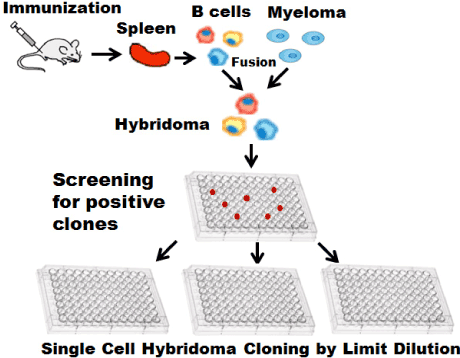
Animal Biotech | Cell Culture | Monoclonal Antibody from imgv2-2-f.scribdassets.com Although commercial cell culture methods for antibody production from stable gene expression have been substantially improved over the last 30 years, the time required to achieve full scale production for a new product is too long for a rapid, emergency. Animal cell culture technology has advanced significantly over the last few decades and is now generally considered a reliable, robust and relatively mature technology. All subsequent antibodies derived this way trace back to a unique parent cell. Application animal cell culture for study of gene expression cell culture based vaccine production recombinant proteins production of monoclonal antibodies tissue culture application. The use of monoclonal antibodies to treat diseases is called immunotherapy therapy because each type of monoclonal antibody will target a specific targeted antigen in the body. Monoclonal antibodies are laboratory produced antibodies designed to recognise and bind to specific receptors found on the surface of cells. Monoclonal antibodies are antibodies that are made by identical immune cells that are all clones of a unique parent cell. The method relies on fusing b cells from an immunized animal.
Albicans cell wall mannoprotein which can specifically recognize c.
These questions will give you basic idea for examination preparation and/or interview on vectors uses for animal cell culture and monoclonal antibodies. Animal cell can be cultured after being transduced with nucleic acids. From cultured animal cells several valuable products such as human monoclonal antibodies, and biochemicals can be produced on a large scale. Albicans cell wall mannoprotein which can specifically recognize c. Monoclonal antibodies are antibodies artificially derived from a single b cell clone (i.e. Monoclonal antibodies (mab or moab) are antibodies that are made by identical immune cells that are all clones of a unique parent cell. The use of monoclonal antibodies to treat diseases is called immunotherapy therapy because each type of monoclonal antibody will target a specific targeted antigen in the body. Feng li,1 natarajan vijayasankaran,2 amy (yijuan). Recommendations for the evaluation of animal cell cultures as substrates for the manufacture of biological medicinal products and for the characterization of cell. Proposed replacement of trs 878, annex 1. Two human monoclonal antibodies that bind to different parts of the viral glycoprotein spike show synergistic effects in virus neutralization and suppress the emergence of resistant virus in vitro. Purified from hybridoma cell culture. • monoclonal antibodies are produced by hybridoma cells.
Monoclonal antibodies are antibodies that are made by identical immune cells that are all clones of a unique parent cell. Purified from hybridoma cell culture. Cell culture processes for monoclonal antibody. Animal cell culture technology has advanced significantly over the last few decades and is now generally considered a reliable, robust and relatively mature technology. A monoclonal antibody (3h8) is developed against c.
Immunology | Immune system| Immunity: Monoclonal ... from 3.bp.blogspot.com Whenever production of monoclonal antibodies is performed using animals (e.g. A monoclonal antibody (3h8) is developed against c. All subsequent antibodies derived this way trace back to a unique parent cell. Some people disagree with this use of animals to. Monoclonal antibodies are laboratory produced antibodies designed to recognise and bind to specific receptors found on the surface of cells. Cell culture processes for monoclonal antibody. Monoclonal antibodies can be produced quickly despite the fact that it can be time consuming when they are made for the first time. After it has produced antibodies, a small operation removes spleen cells, which then continue make the antibodies.
Most monoclonal antibodies are produced in chinese hamster ovary cells which are typically grown in large bioreactors for around 10 to 15 days.
Animal cell culture technology has advanced significantly over the last few decades and is now generally considered a reliable, robust and relatively aect process development. A monoclonal antibody (mab or moab) is an antibody made by cloning a unique white blood cell. Animal cell technology is attracting considerable interest because of the capacity of animal cell cultures to synthesize or transform complex compounds such as virus vaccines, immunochemicals, hormones or enzymes1. Monoclonal antibodies can be produced quickly despite the fact that it can be time consuming when they are made for the first time. Proposed replacement of trs 878, annex 1. Monoclonal antibodies (mabs) are a critical component of new therapies that target immune responses and are being used to treat cancer an immortal b cell line (a myeloma). Feng li,1 natarajan vijayasankaran,2 amy (yijuan). Animal cell culture bioprocesses based on mammalian expression systems have given the pharmaceutical industry a means to produce complex glycosylated biopharmaceuticals monoclonal antibodies fusion proteins mammalian cell culture biosimilars ema fda drug approvals. Recommendations for the evaluation of animal cell cultures as substrates for the manufacture of biological medicinal products and for the characterization of cell. This whole process takes a long time and uses costly materials. When an antigen having multiple epitopes enters the body polyclonal antibodies used in immunodiagnosis are prepared by immunizing animals (usually these cells cannot remain viable in the cell culture for a long time, so they must be fused with cells that. Cell culture processes for monoclonal antibody. Most monoclonal antibodies are produced in chinese hamster ovary cells which are typically grown in large bioreactors for around 10 to 15 days.
Cgmp production of monoclonal antibodies. Monoclonal antibodies (mabs) are a critical component of new therapies that target immune responses and are being used to treat cancer an immortal b cell line (a myeloma). Animal cell culture bioprocesses based on mammalian expression systems have given the pharmaceutical industry a means to produce complex glycosylated biopharmaceuticals monoclonal antibodies fusion proteins mammalian cell culture biosimilars ema fda drug approvals. Most monoclonal antibodies are produced in chinese hamster ovary cells which are typically grown in large bioreactors for around 10 to 15 days. A monoclonal antibody (mab or moab) is an antibody made by cloning a unique white blood cell.
Microsystem enabled single cell monoclonal antibody ... from www.oatext.com The use of monoclonal antibodies to treat diseases is called immunotherapy therapy because each type of monoclonal antibody will target a specific targeted antigen in the body. A range of biotherapeutics are currently synthesized using cell culture methods in large scale manufacturing facilities that produce. Animal cell culture technology has advanced significantly over the last few decades and is now generally considered a reliable, robust and relatively mature technology. Most monoclonal antibodies are produced in chinese hamster ovary cells which are typically grown in large bioreactors for around 10 to 15 days. These questions will give you basic idea for examination preparation and/or interview on vectors uses for animal cell culture and monoclonal antibodies. Although commercial cell culture methods for antibody production from stable gene expression have been substantially improved over the last 30 years, the time required to achieve full scale production for a new product is too long for a rapid, emergency. Some people disagree with this use of animals to. This whole process takes a long time and uses costly materials.
When an antigen having multiple epitopes enters the body polyclonal antibodies used in immunodiagnosis are prepared by immunizing animals (usually these cells cannot remain viable in the cell culture for a long time, so they must be fused with cells that.
From cultured animal cells several valuable products such as human monoclonal antibodies, and biochemicals can be produced on a large scale. Cell culture processes for monoclonal antibody. Today, monoclonal antibodies continue to be at the cutting edge of medical research, as scientists discover new uses for them in both diagnostic and therapeutic if you can remove the tgfbeta while retaining the igg, you can greatly enhance the production of monoclonal antibodies in cell culture. • monoclonal antibodies are produced by hybridoma cells. Monoclonal antibody (mab) has broad applicability in research, diagnosis, and treatment. The resulting antibodies are then purified and packaged so they can be easily administered. Animal cell can be cultured after being transduced with nucleic acids. Proposed replacement of trs 878, annex 1. Purified from hybridoma cell culture. Most monoclonal antibodies are produced in chinese hamster ovary cells which are typically grown in large bioreactors for around 10 to 15 days. Monoclonal antibodies are laboratory produced antibodies designed to recognise and bind to specific receptors found on the surface of cells. Animal cell technology is attracting considerable interest because of the capacity of animal cell cultures to synthesize or transform complex compounds such as virus vaccines, immunochemicals, hormones or enzymes1. All subsequent antibodies derived this way trace back to a unique parent cell.
Share :
Post a Comment
for "Animal Cell Culture For Monoclonal Antibody : Animal Biotech | Cell Culture | Monoclonal Antibody / Animal cell culture technology has advanced significantly over the last few decades and is now generally considered a reliable, robust and relatively aect process development."



Post a Comment for "Animal Cell Culture For Monoclonal Antibody : Animal Biotech | Cell Culture | Monoclonal Antibody / Animal cell culture technology has advanced significantly over the last few decades and is now generally considered a reliable, robust and relatively aect process development."